Copyright © 2026 Woodvalley Vineyards Ltd

Sponsored by Alden Rose, Billericay
www.aldenrose.co.uk
Low Energy Building Design

Members of WineGB

The Great British Vineyard Guide


Cellar Door
September Opening Times:
Thursday -
Sunday 10am -
Please phone for other times
07926 474711
Find Us
Woodvalley Vineyards Ltd
Woodvalley Farm
Outwood Common Road
Billericay, Essex CM11 1ET
W3W: stand.pull.deck
T: 07926 474711
E: info@woodvalleyvineyards.co.uk


🍷 From Vine to Wine
A bottle of wine can disappear surprisingly quickly once it's opened.
What you don't see are the months or years of work that went into producing it.
From the first buds appearing in the vineyard, through flowering, ripening and harvest, followed by fermentation, ageing and bottling, every bottle is the end result of an extraordinarily long journey.
Which does make the fact that four people can polish one off over dinner in about twenty minutes seem slightly unreasonable.
But after all that work...
Someone has to drink it.
Cheers from the Four Non-
The Lifecycle of a Bottle of Wine
Growing the grapes is only half the story.
Once harvest day arrives and the last bunch has been picked, our grapes leave the vineyard and begin the next stage of their journey — turning all that sunshine, rain, worry and hard work into an actual bottle of wine.
So what happens between a crate of freshly picked grapes arriving at the winery and the considerably more exciting moment when a cork is pulled?
Quite a lot, as it turns out.
Here’s the journey from grape to glass.
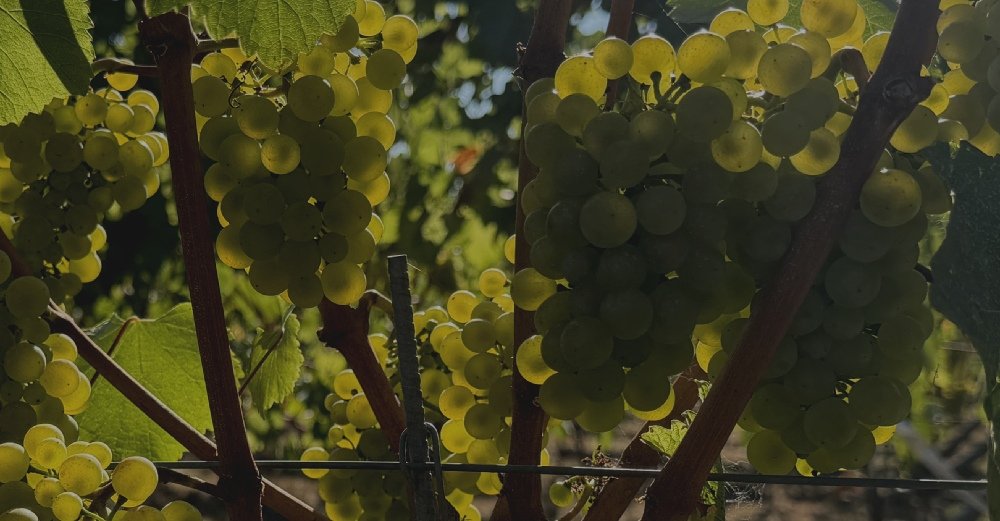
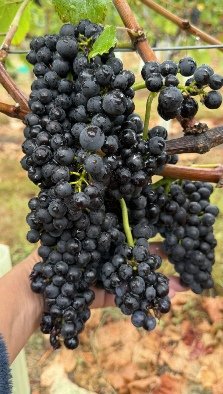
🍇 1. Harvest – It All Starts Here
The first decision is when to pick.
Throughout the final weeks of ripening, the grapes are regularly tested for their sugar levels (Brix), acidity and pH. The winemaker isn't necessarily waiting for the sweetest possible grape — they're looking for the right balance for the style of wine being made.
Once the numbers, flavours and weather gods all agree, it's time.
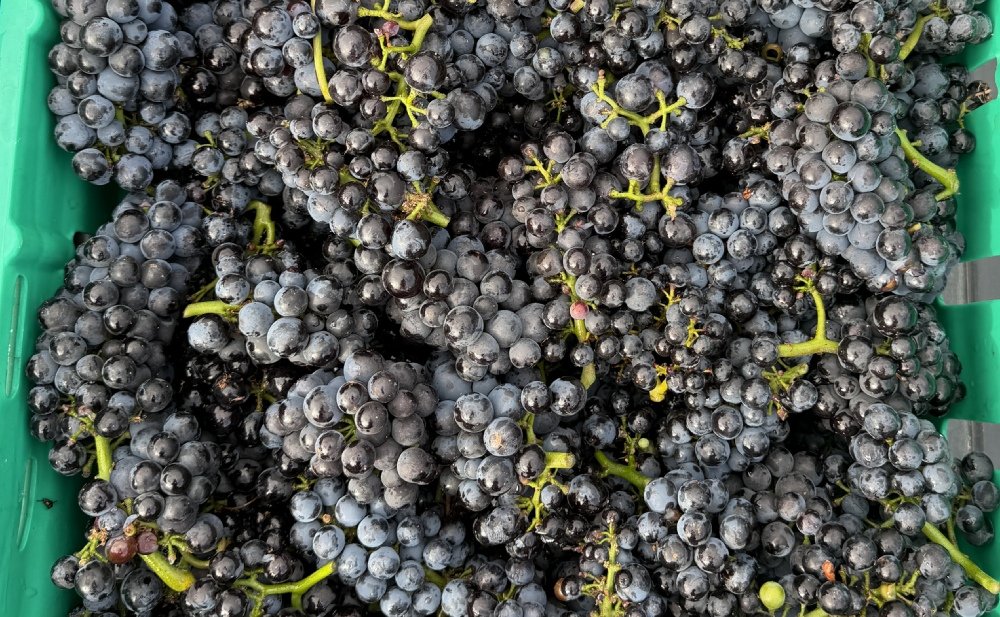
The grapes are picked, carefully collected into crates and transported to the winery as quickly as possible.
And after spending an entire year growing them, watching them disappear down the road is a strangely emotional moment!
From Harvest To Glass
🍇 2. Sorting, Crushing & Destemming
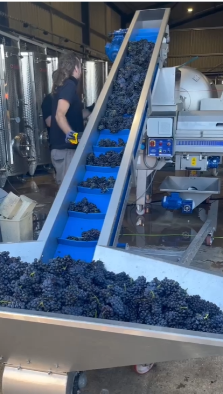
Once at the winery, the grapes are checked and any unwanted leaves, damaged fruit or other bits that shouldn't be there are removed.
Depending on the wine being made, the grapes may then be destemmed, separating the berries from their stalks, before being gently crushed.
And “crushing” isn't quite as dramatic as it sounds.
The idea isn't to pulverise the grapes — it's simply to break the skins and release the juice.
No bare feet required Lucile! .
🧃 3. Pressing – Getting to the Good Stuff
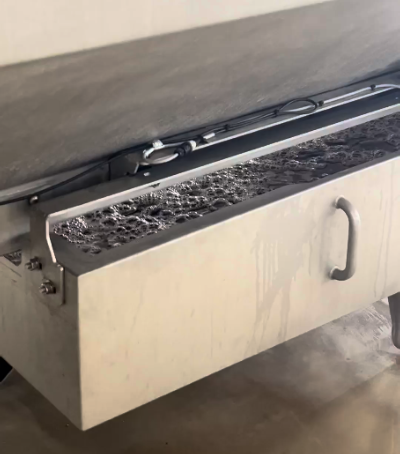
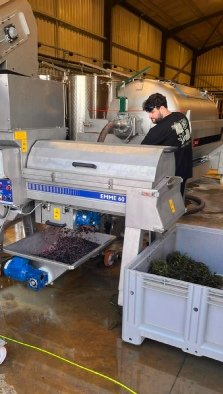
Next comes the press.
For white and rosé wines, the grapes are generally pressed relatively early to separate the juice from the skins and seeds.
For red wine, the skins are usually kept with the juice during fermentation because that's where much of the wine's colour and tannin comes from.
The freshly pressed grape juice now has its own wine word:
Must
Basically, grape juice that's about to get considerably more interesting.

Chateau Billericay!
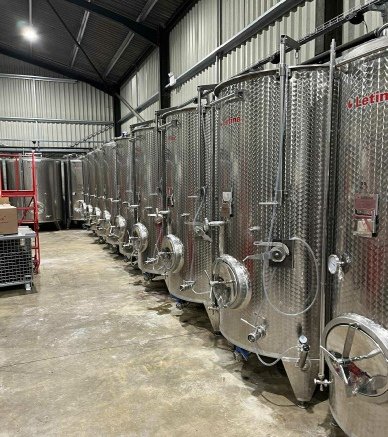
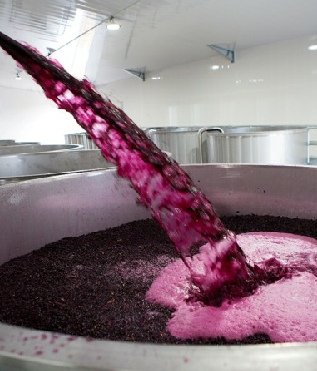
🦠 4. Fermentation – Where Grape Juice Becomes Wine
And now the clever bit: Yeast converts the natural sugars in the grape juice into alcohol and carbon dioxide.
This is alcoholic fermentation and it's the point at which our grape juice officially starts becoming wine.
Temperature is carefully controlled because it influences how quickly fermentation happens and the flavours and aromas that develop.
It can take days or weeks depending on the wine being made.
And despite thousands of years of winemaking history, there is still something rather magical about watching a tank of grape juice quietly turn itself into wine.
🌹 5. White, Rosé or Red – Why the Difference?
This is where the routes can vary. For white wine, the juice is normally separated from the skins before fermentation.
For rosé, dark-
For red wine, the juice ferments with the skins for much longer, extracting colour, flavour and tannin.
So despite what you might assume: Rosé isn't simply red wine mixed with white wine.
Well... usually. There are exceptions in the wine world, because naturally there are. 😂
Chateau Billericay!
🧪 6. Malolactic Fermentation – The Other Fermentation
Some wines go through another process called malolactic fermentation, or MLF if you'd rather sound like you know what you're talking about.
This converts sharper malic acid — think green apples — into softer lactic acid.
The result can be a rounder, softer, creamier style of wine.
Not every wine goes through it. The winemaker decides whether it suits the style they're trying to create.
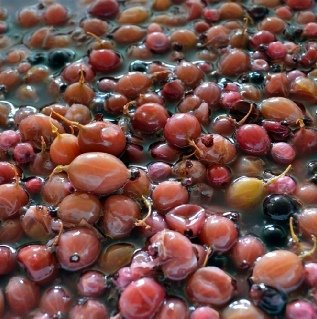
🍞 7. Lees – Sitting Around With Dead Yeast
Once fermentation has finished, the yeast cells eventually die and settle at the bottom of the tank.
These are called the lees. Which doesn't sound terribly exciting.
But leaving wine in contact with its lees can add texture, body and flavours such as bread, biscuit or brioche.
The wine may even be stirred occasionally — a process called bâtonnage — to increase the effect.
So when a tasting note proudly announces “aged on the lees”, you now know what it's talking about.
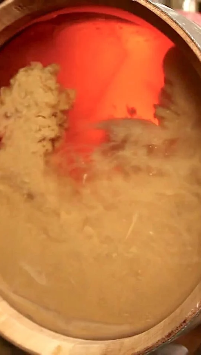
🔄 8. Racking – Time for a Tidy Up
As wine settles, sediment collects at the bottom of the tank or barrel.
Racking simply means carefully moving the clear wine into another vessel while leaving that sediment behind.
Think of it as wine having a little spring clean.
This may happen several times while the wine develops.
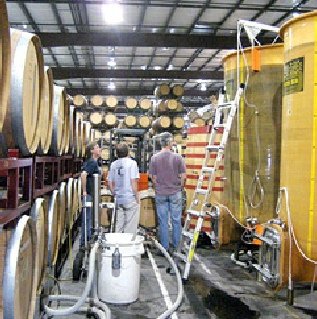
🪵 9. Ageing – Tank, Barrel or Bottle?
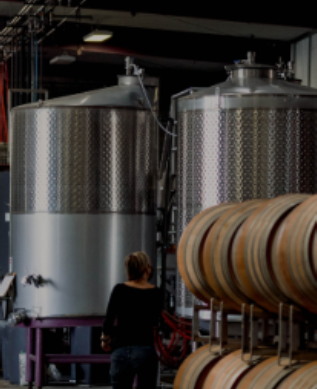
Once fermentation is complete, the wine needs time to settle, develop and mature. It might be aged in stainless steel, which helps preserve fresh, fruity flavours.
Or it may spend time in oak barrels, which can add flavours such as vanilla, spice, toast or smoke and allow the wine to develop differently.
Some wines spend only a few months ageing. Others wait for years.
Which explains why winemaking requires one ingredient that isn't grown in the vineyard:
Patience. Lots and lots of patience.


🍷 And Then the Road Splits...
🍾 STILL WINE
Ageing
↓
Blending – if required
↓
Fining & Filtering
↓
Bottling
↓
Labelling
↓
🥂 SPARKLING WINE
Base Wine
↓
Tirage – yeast and sugar are added
↓
Second Fermentation in the Bottle
↓
Lees Ageing
↓
Riddling – gradually moving the sediment towards the neck
↓
Disgorgement – removing that sediment
↓
Dosage – the finishing addition
↓
Cork, Cage & Foil
↓
Drink it! 🍷
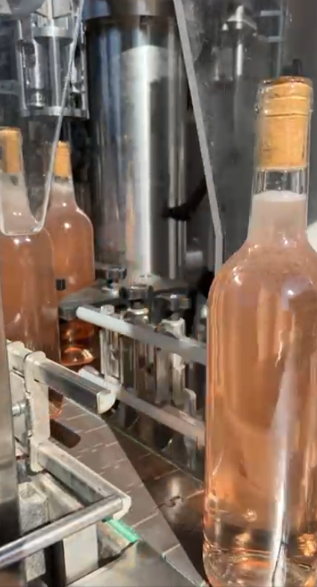
🍾 10. Fining, Filtering & Bottling
Before bottling, the winemaker may clarify the wine through fining and/or filtration, removing tiny suspended particles and helping create a clear, stable finished wine.
Not every wine is treated in exactly the same way — you'll sometimes see bottles proudly labelled unfined or unfiltered.
Then finally, after months — and for some wines, years — of growing, harvesting, fermenting, ageing, testing, tasting and waiting...
The wine goes into its bottle.
Cork or closure goes in.
Label goes on.
Case gets packed.
And eventually, it reaches you.