Copyright © 2026 Woodvalley Vineyards Ltd

Sponsored by Alden Rose, Billericay
www.aldenrose.co.uk
Low Energy Building Design

Members of WineGB

The Great British Vineyard Guide


Cellar Door
September Opening Times:
Thursday -
Sunday 10am -
Please phone for other times
07926 474711
Find Us
Woodvalley Vineyards Ltd
Woodvalley Farm
Outwood Common Road
Billericay, Essex CM11 1ET
W3W: stand.pull.deck
T: 07926 474711
E: info@woodvalleyvineyards.co.uk


Food & Wine -
Food & Wine Pairing
A Simple Guide
Red wine with meat. White wine with fish. Champagne when somebody gets married.
Food and wine pairing used to sound relatively straightforward.
Then somebody started telling us about acidity, tannins, umami and flavour intensity, and suddenly choosing a bottle to go with dinner required considerably more thought than actually cooking it.
The good news is that food and wine pairing really doesn't need to be complicated.
There are a handful of simple reasons why some combinations work particularly well together — and once you understand them, choosing a wine becomes a lot easier.
So forget the rule book. Here's our Four Non-
🍋 Acidity – Fresh Loves Fresh
Acidity is one of the most useful things to think about when pairing wine with food.
A wine with good acidity can cut through rich or fatty foods, cleanse your palate and leave you ready for the next mouthful.
It's why crisp wines work so well with creamy sauces, oily fish and rich cheeses.
There's also one very useful rule:
Try to make sure your wine is at least as acidic as the food.
Serve a soft, low-
Think: Sauvignon Blanc with goat's cheese, crisp English sparkling with fish & chips, or a fresh rosé with a tomato-
And yes, fish & chips with sparkling wine is genuinely an excellent pairing.
This is going to be an educational series after all. 🥂



🧈 Fat – Bring on the Bubbles & Tannins
Rich, fatty foods coat your mouth.
Wine can provide the contrast that clears everything away.
High-
With red meat, tannin can do a similar job. Tannins interact with proteins and fats, softening the sensation of the wine while making the food seem richer and more succulent.
That's one reason a tannic red and a juicy steak are such old friends.
So the traditional red wine + steak rule isn't entirely wine snobbery.
There is actually some logic behind it.
🧂 Salt – Wine's Best Friend
Salt is wonderfully forgiving when it comes to wine.
It can soften the perception of tannin and bitterness and make a wine seem fruitier and smoother.
Which explains some rather fabulous combinations:
- Champagne & salted crisps.
- Sparkling wine & fish and chips.
- Port & salty blue cheese.
You may have noticed that two of those involve bubbles -
🌶️ Spice – Handle With Care
Here's where a big powerful wine isn't necessarily your friend.
Very spicy food can make high alcohol and tannin feel even hotter and more aggressive.
Instead, spicy dishes often work beautifully with fresh, fruity wines, particularly those with lower alcohol and perhaps a little sweetness.
Think aromatic whites, off-
And if you're eating a seriously hot curry, this probably isn't the moment to open the enormous Cabernet Sauvignon you've been saving.
Your taste buds already have enough to contend with. 😂😂😂
🍯 Sweetness – The Wine Needs to Keep Up
Dessert presents one of the easiest pairing rules to remember:
The wine should generally be at least as sweet as the food.
Pair a dry wine with a very sweet dessert and the wine can suddenly taste thin, sharp or bitter.
A sweeter wine, however, can complement the dessert rather than fighting against it.
Think dessert wine with fruit tarts, Sauternes with something rich and creamy, or Port with chocolate.
Although chocolate is one of those foods that can be surprisingly tricky to pair.
Fortunately, extensive experimentation is permitted.�🍰🍫😋�
🍄 Umami – The Awkward One
Umami is that savoury, mouth-
Umami can make tannins and bitterness seem stronger while making the wine's fruit seem less obvious.
The trick is to look at what else is on the plate.
Salty umami-
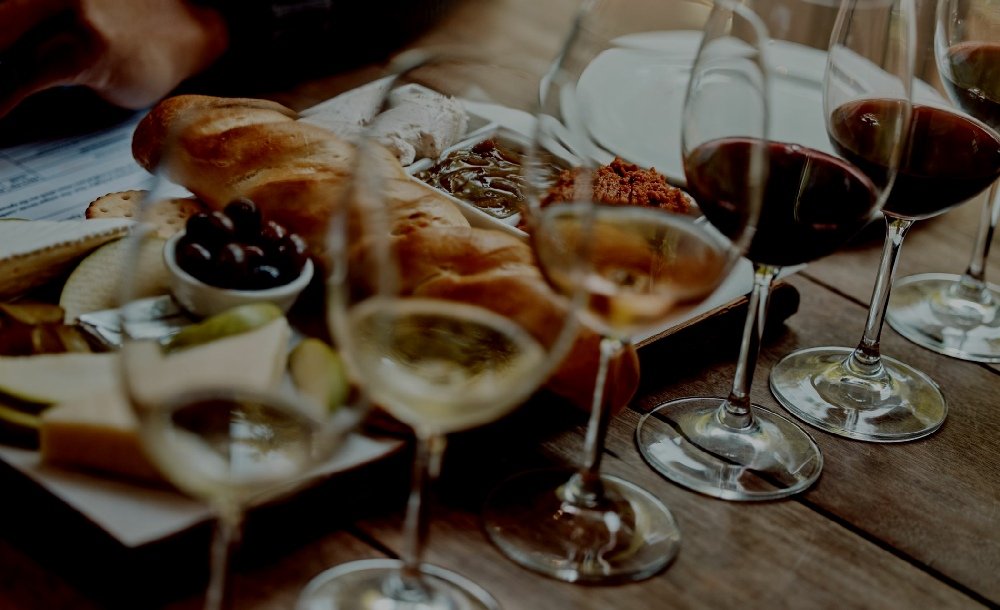
Which rather conveniently explains why a board piled with cheese, charcuterie and a bottle of wine is such a successful arrangement.
Science has spoken.
⚖️ Match the Weight – Delicate With Delicate
Sometimes the easiest way to pair food and wine has nothing to do with colour.
Think about weight and intensity.
A delicate dish can easily be overwhelmed by a huge, powerful wine. Equally, a light, subtle wine may completely disappear alongside a rich casserole or heavily flavoured steak.
So try:
- Light food → lighter wine
- Rich, powerful food → fuller, more intense wine
A delicate fish dish might suit a fresh white wine, while slow-
It's less about red versus white and more about making sure neither the food nor the wine is shouting over the other.
🍷 The Four Non-
If you remember absolutely nothing else from this page, remember these:
Rich or fatty food? → Look for acidity, bubbles or tannin.
Salty food? → You're already halfway there.
Spicy food? → Fruity, refreshing and lower alcohol.
Sweet food? → Make sure the wine is sweeter.
Delicate food? → Don't overpower it.
Big, rich food? → Give it a wine that can fight back.
But perhaps the most important rule of all:
Drink What You Like.
There are some genuinely good reasons why particular wines and foods complement each other, and understanding them can lead you to some brilliant combinations.
But if somebody tells you that you can't drink your favourite red with fish, or that your favourite white is completely wrong with steak...
...and you love them together?
Carry on.
It's your dinner afterall. 🍷
Coming Next...
In Food & Wine – Pt 2, we'll put all this theory into practice with our simple guide to white wine and food — what to pair with everything from fish and seafood to chicken, cheese, pasta and a Friday-
There may even be a few surprises.
Cheers from the Four Non-

